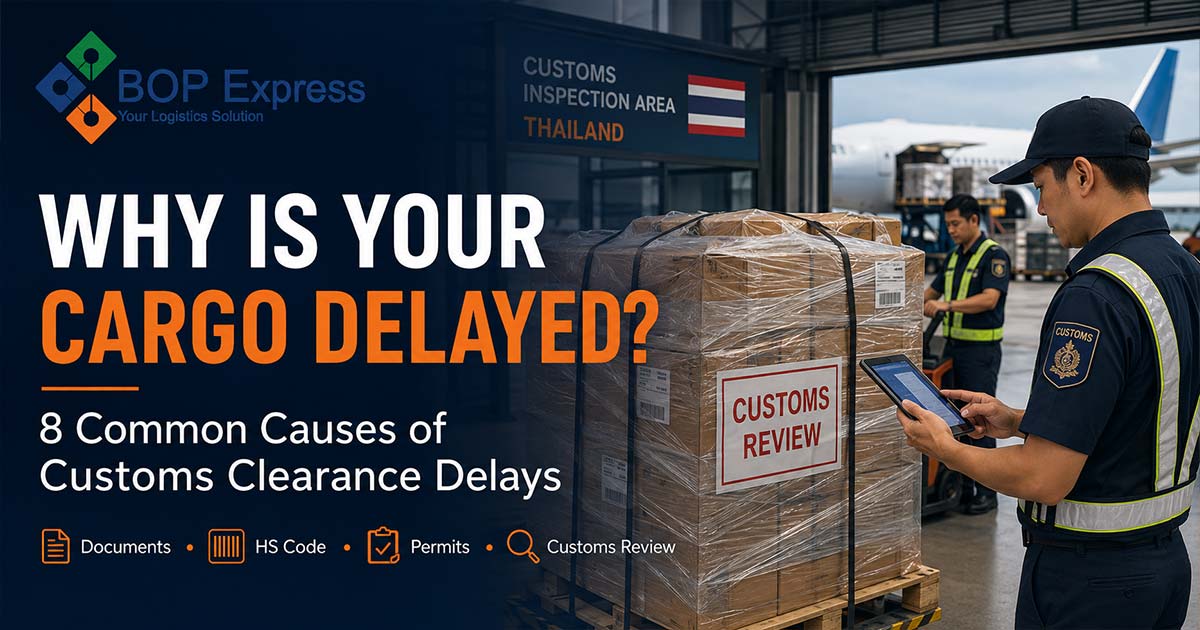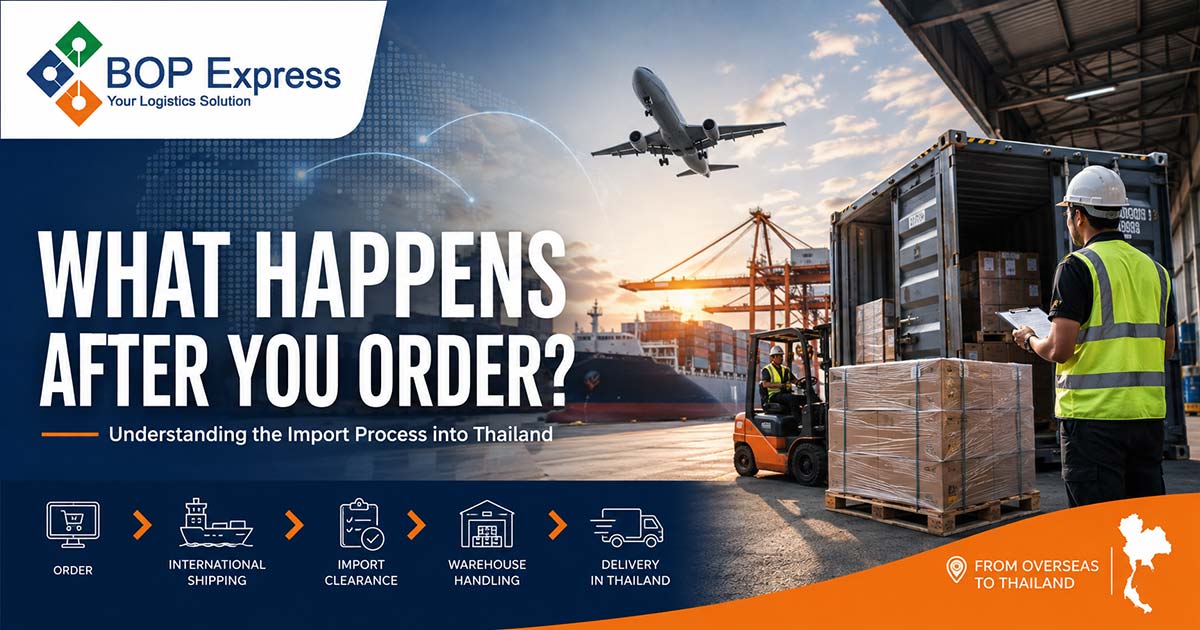
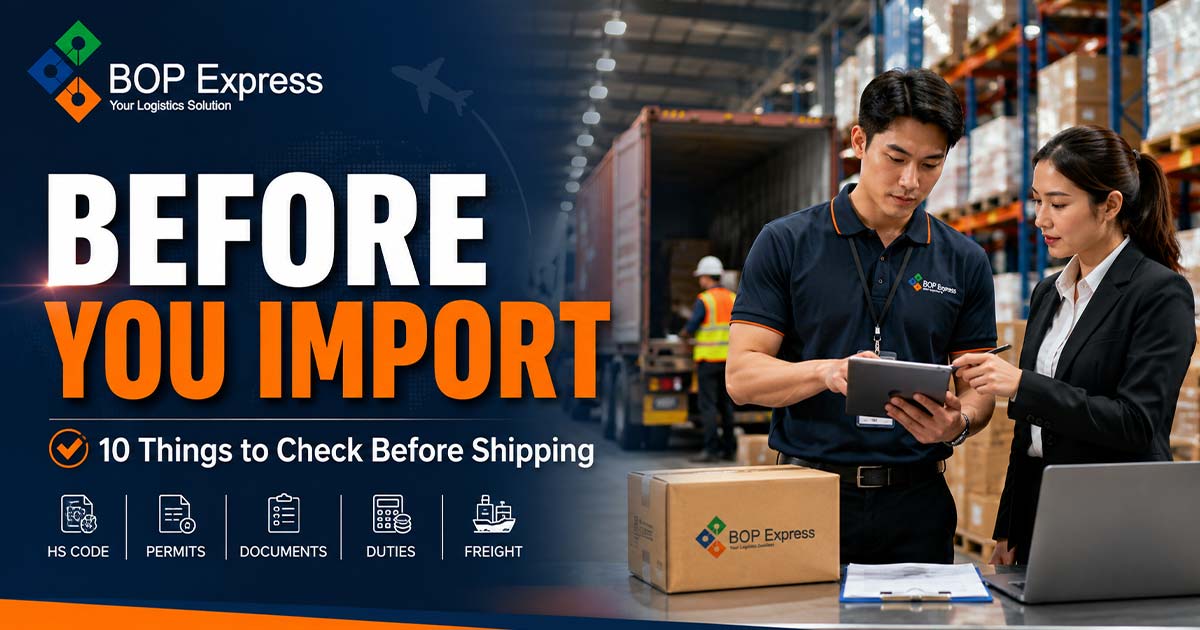
Importing goods into Thailand should not begin when the cargo reaches the port or airport.
For businesses, the most important decisions are often made before the supplier ships the goods.
At this stage, importers still have time to verify the product, review documentation, confirm customs requirements, choose a transportation method, and estimate the actual landed cost.
Once the cargo has already departed, correcting some issues may become more difficult, more expensive, or more time-sensitive.
Here are 10 areas businesses should review before starting an import shipment to Thailand.
1. Confirm Exactly What You Are Importing
The first question sounds simple:
What exactly is the product?
However, descriptions provided by suppliers are sometimes too general.
Examples include:
- Machine Parts
- Accessories
- Equipment
- Samples
- Chemical Products
- Plastic Parts
- Electronic Components
For import planning, more detailed information may be required.
Depending on the product, useful information can include:
- material
- composition
- function
- specification
- model
- brand
- technical data
- intended use
The clearer the product information is, the easier it becomes to evaluate customs classification, permits, and applicable import requirements.
2. Review the HS Code
An HS Code is used to classify goods for customs purposes.
It can affect several aspects of an import, including:
- customs duty
- import restrictions
- permits or certificates
- reporting requirements
- other regulatory conditions
Importers should therefore avoid treating an HS Code as simply another number copied from a supplier’s invoice.
The classification should reflect the actual characteristics and use of the goods.
For products that are complex, technical, or unfamiliar, classification should preferably be reviewed before the shipment is dispatched.
3. Check Whether the Product Requires an Import Permit
Some goods can be imported through normal customs procedures.
Others are subject to additional controls.
Thai Customs distinguishes between prohibited goods and restricted goods. Restricted goods are subject to legal controls and may require permission from the relevant government authority during customs formalities.
Examples of goods that may involve another regulatory agency include certain:
- food products
- medicines
- cosmetics
- agricultural products
- plants
- animal products
- telecommunications equipment
- industrial goods
- chemicals
- vehicle-related products
The exact requirement depends on the specific product.
The important question is therefore not:
“Can this product be shipped?”
but:
“Can this product legally be imported into Thailand under the required conditions?”
4. Estimate Import Duties and Taxes
The supplier’s selling price is not the final cost of imported goods.
Depending on the product and transaction, import costs may include:
- customs duty
- VAT
- excise tax where applicable
- freight
- insurance
- customs clearance charges
- terminal or port charges
- warehouse charges
- inland transportation
The applicable customs duty depends partly on the tariff classification and applicable tariff rules.
Thai Customs maintains tariff-classification and import-duty reference services that businesses can use when reviewing applicable rates.
Importers should therefore estimate these costs before confirming whether an overseas purchase is commercially viable.
5. Understand the Incoterms
Incoterms define important responsibilities between the buyer and seller in an international transaction.
Examples include:
- EXW
- FCA
- FOB
- CFR
- CIF
- DAP
- DDP
The selected Incoterm can affect:
- who arranges transportation
- where responsibility transfers
- who pays certain freight costs
- who handles export arrangements
- who handles import-related responsibilities
For example, a product quoted at a lower selling price under EXW may ultimately require the buyer to arrange significantly more logistics activities than a shipment quoted under another term.
Businesses should therefore understand the Incoterm before comparing supplier prices.
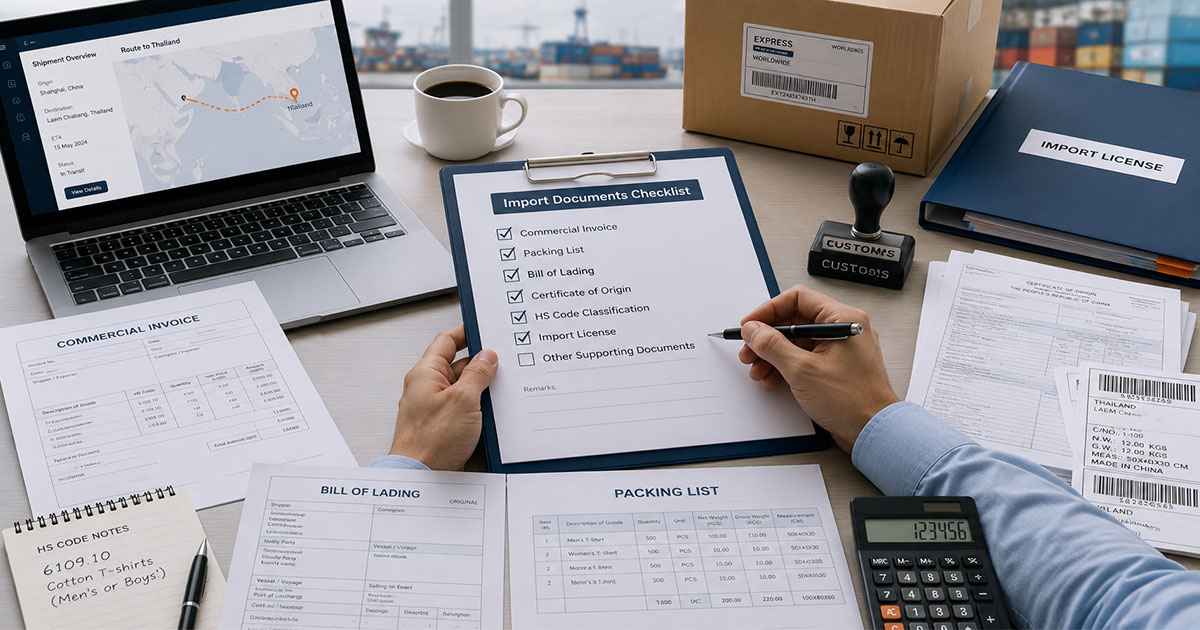
6. Check the Shipping Documents
Common documents for international shipments may include:
- Commercial Invoice
- Packing List
- Bill of Lading or Air Waybill
- Certificate of Origin
- import permit or certificate
- insurance documents
- technical documents
- product-specific certificates
Importers should verify that the information across these documents is consistent.
Important fields may include:
- product description
- quantity
- weight
- number of packages
- shipper
- consignee
- country of origin
- unit price
- total value
Document problems are much easier to correct while the supplier is still preparing the shipment than after the cargo has arrived in Thailand.
7. Choose the Appropriate Transportation Method
Not every shipment should automatically move by the cheapest freight option.
The appropriate method depends on the characteristics of the cargo and business requirements.
Air Freight
May be suitable when:
- delivery is urgent
- cargo volume is relatively limited
- products are high-value
- production downtime must be avoided
Sea Freight
May be suitable when:
- cargo volume is large
- goods are heavy
- transportation time is more flexible
- cost efficiency is a major consideration
Cross-Border Transportation
May be relevant for regional trade with neighbouring countries depending on origin, destination, route, and cargo type.
Transportation planning should consider more than the freight rate alone.
8. Calculate the Landed Cost
A common purchasing mistake is comparing suppliers only on unit price.
For imported products, the more meaningful figure is often the landed cost.
This can include:
Product Cost
- International Freight
- Insurance
- Customs Duty
- Taxes
- Clearance Charges
- Port / Terminal Charges
- Warehouse Charges
- Domestic Delivery
- Other applicable costs
Only after these costs are considered can a business properly evaluate whether the imported product remains commercially competitive.
9. Plan the Delivery After Customs Clearance
The shipment does not stop moving after Customs releases it.
Businesses should also determine:
- who will collect the cargo
- whether a truck is required
- whether the shipment needs deconsolidation
- whether special unloading equipment is necessary
- warehouse receiving hours
- factory delivery restrictions
- project-site requirements
- whether advance booking is required
For industrial machinery or project cargo, this stage can require substantial coordination.
A successful import therefore involves planning from the overseas supplier all the way to the final receiving location.
10. Review the Shipment Before It Leaves Origin
This final step ties everything together.
Before authorising the supplier to ship, businesses should review:
- product description
- HS Code
- import requirements
- licences and certificates
- Invoice
- Packing List
- transportation method
- Incoterms
- estimated duties and taxes
- destination delivery arrangements
If an issue is discovered at this stage, there is usually more flexibility to correct it.
If the same issue is discovered only after the cargo reaches Thailand, the business may already be facing additional time pressure and logistics costs.
A Practical Pre-Import Checklist
Before approving shipment, ask:
- Do we know exactly what the product is?
- Has the HS Code been reviewed?
- Does the product require an import licence?
- Have duties and taxes been estimated?
- Are the Incoterms understood?
- Are Invoice and Packing List correct?
- Is the transportation mode appropriate?
- Do we know the expected landed cost?
- Is final delivery arranged?
- Has the shipment been reviewed before departure?
If any of these questions cannot yet be answered, the shipment may need further preparation.
Import Planning Is Part of Supply Chain Management
Importing is not simply a transportation activity.
It connects:
Purchasing → Compliance → Customs → Transportation → Warehousing → Inventory → Production → Customer Delivery
A problem at the import stage can therefore affect the wider supply chain.
For manufacturers, distributors, trading companies, and project-based businesses, pre-import planning can help reduce avoidable uncertainty before goods begin moving.
BOP Express — Import Logistics and Customs Support
BOP Express supports businesses with international logistics and customs-clearance activities for shipments entering Thailand.
Services include:
- Air Freight
- Sea Freight
- Cross-Border Logistics
- Freight Forwarding
- Customs Clearance
- document coordination
- inland transportation
- cargo delivery
For new products, unfamiliar cargo, industrial shipments, or goods subject to specific regulatory requirements, early coordination can help identify important logistics and customs considerations before the shipment leaves origin.
If your business is preparing an import shipment to Thailand, reviewing these issues before shipping provides a much stronger starting point than trying to resolve them after the cargo has already arrived.